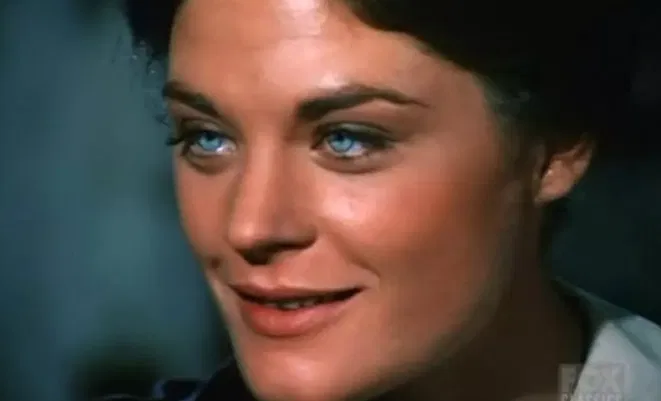

I’ve always thought there are two kinds of beauty in movies. One disappears when the lighting changes or the years pass. The other kind only gets deeper.
Monica Bellucci belongs to the second kind.
She was born September 30, 1964 in Città di Castello, a small, peaceful town in Umbria, Italy. An only child in a modest family — her father worked in agriculture, her mother painted — she grew up far from the glamour she would later embody. As a teenager she actually studied law at the University of Perugia. The story goes that she started modeling just to help pay for university books and rent. One thing quietly led to another: Milan, Paris, Dolce & Gabbana campaigns, Dior, Cartier… and very soon the runways weren’t enough anymore.
Her first real screen roles came in Italian television and cinema in the early 90s. Then in 1992 Francis Ford Coppola gave her a small but unforgettable part in Bram Stoker’s Dracula. That was the door opening. After that she moved between worlds with ease: European arthouse, American blockbusters, French cinema, Italian classics.
The early 2000s became her most iconic period:
- Malèna (2000) by Giuseppe Tornatore — the film that made the whole world stop and look
- Irreversible (2002) — raw, controversial, fearless
- Persephone in The Matrix Reloaded and Revolutions (2003)
- Mary Magdalene in The Passion of the Christ (2004)
- And later, at 50 years old, she became the oldest woman to play a Bond girl in Spectre (2015) — and Lucia Sciarra was never just “the beautiful woman.” She was dangerous, intelligent, magnetic.

She’s never stayed in one genre. She’s done mafia comedies (Mafia Mamma, 2023), Tim Burton’s strange fairy-tale world (Beetlejuice Beetlejuice, 2024), Paolo Sorrentino’s poetic television (The Young Pope, The New Pope), and dozens of smaller, quieter European films most people never see. In 2021 she received a special David di Donatello award for her lifetime contribution to Italian cinema — one of those rare moments when the industry says: we see you, we remember.
But what I find most striking today isn’t the filmography. It’s how she speaks about time.
She has never pretended aging is invisible. She has never joined the war against wrinkles or gray hair. In interviews she says things like:
- “I want to grow old peacefully, without fighting time.”
- “I’ve grown older without asking permission from anyone.”
- “Beauty is not about erasing the years — it’s about what you carry in your eyes.”
She refuses to play the eternal-youth game. She refuses to disappear when Hollywood decides a woman over 45 should fade into the background. And somehow that refusal makes her more present, more powerful, more herself with every passing year.
Her personal life has always felt refreshingly private yet honest. She was married to Vincent Cassel from 1999 to 2013. They have two daughters: Deva (2004) and Léonie (2010). She later had a relationship with Tim Burton that ended amicably in 2025. Today she lives between Paris and Italy, stays close to her daughters, and chooses work that still excites her artistically rather than whatever guarantees the most headlines.
Monica Bellucci has never apologized for being sensual. She has never tried to become smaller, safer, more “appropriate” as the years passed. She has never let the industry decide when her story should end.
In a world obsessed with filters, retouching, and staying twenty-five forever, she simply exists — fully, confidently, unapologetically — at every age she reaches.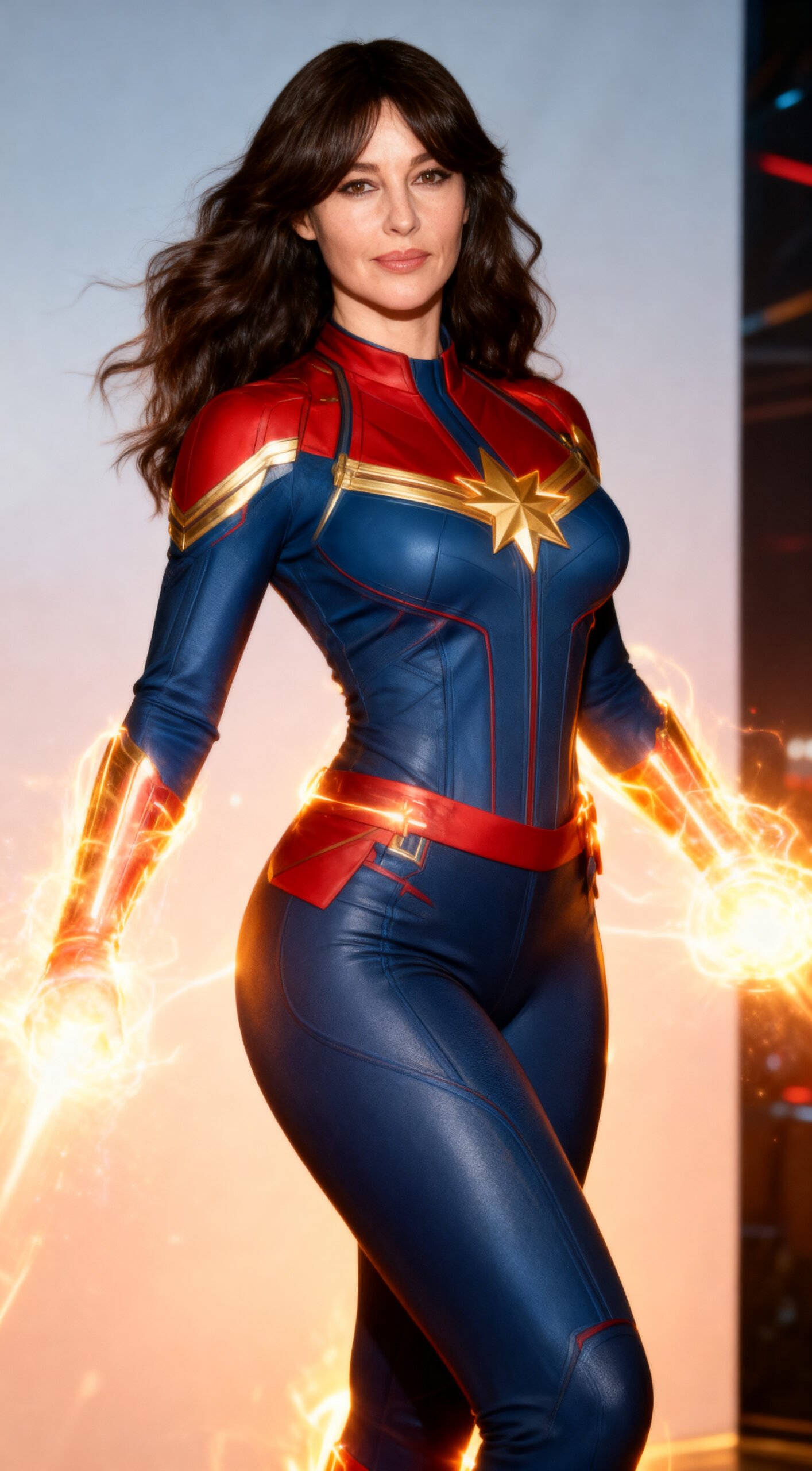
And that, to me, is the rarest kind of beauty there is.
Not the kind that fights time. The kind that walks with it, hand in hand, and somehow becomes more beautiful because of it.