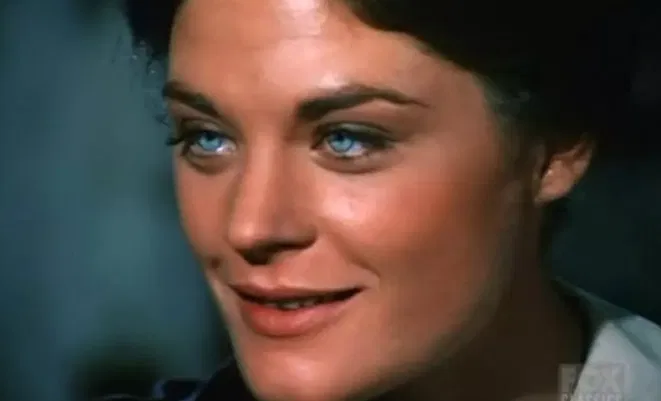

There are certain names in cinema and fashion that feel almost mythical. Monica Bellucci is one of them. For more than three decades, she has moved effortlessly between high-fashion runways, bold European arthouse films, major Hollywood blockbusters, and even the theater stage—always with that same magnetic presence. At 61, she remains one of the most recognizable and respected figures in international entertainment, proving that elegance, depth, and power only deepen with time.
She was born Monica Anna Maria Bellucci on September 30, 1964, in the small Umbrian town of Città di Castello, Italy. The only child of a trucking-company owner father and a painter mother, she grew up in a modest household far removed from the glamour she would later embody. As a teenager she began modeling locally, initially just to earn pocket money. While studying law at the University of Perugia, she continued modeling on the side—until the side job started to feel more like her true calling than the courtroom ever did.
In 1988 she made the classic move to Milan, signing with Elite Model Management. The city’s fashion scene quickly embraced her striking features and natural charisma. Campaigns for Dolce & Gabbana, Cartier, and Dior followed, and she became a familiar face on international magazine covers. Yet even at the height of her modeling success, Bellucci felt drawn toward acting. She wanted roles that demanded more than surface beauty—characters with complexity, vulnerability, and strength.
Her screen debut came in the early 1990s with small parts in Italian television and film. The real turning point arrived in 1996 with L’Appartement (The Apartment), a French psychological thriller directed by Gilles Mimouni. Her performance earned a César Award nomination for Most Promising Actress and signaled to the industry that she was far more than a beautiful face. International audiences soon took notice.
The year 2000 brought two defining roles. In Giuseppe Tornatore’s Malèna, she played the title character—a young widow in wartime Sicily whose beauty becomes both a blessing and a curse. The film was sensual, poignant, and controversial; it turned Bellucci into a global sensation. That same year she appeared opposite Gene Hackman in the thriller Under Suspicion, showing she could hold her own in English-language cinema.
The early 2000s were a whirlwind. She played a seductive vampire in Brotherhood of the Wolf (2001), Cleopatra in the lighthearted Asterix & Obelix: Mission Cleopatra (2002), and the intense, polarizing Alex in Gaspar Noé’s Irréversible (2002). Then came her unforgettable turn as Mary Magdalene in Mel Gibson’s The Passion of the Christ (2004), a performance that blended quiet dignity with raw emotion.
Hollywood took further notice. She joined the Wachowskis’ The Matrix sequels (Reloaded and Revolutions, both 2003) as Persephone, delivering one of the franchise’s most memorable supporting roles. In 2015 she made history in Spectre, becoming—at age 50—the oldest actress to play a Bond girl (Lucia Sciarra). Rather than a gimmick, the casting felt entirely natural: her character was sophisticated, dangerous, and utterly believable.
Bellucci has never limited herself to one language or one style. She has worked steadily in French cinema (How Much Do You Love Me?, The Ages of Love), Italian productions (The Wonders, On the Milky Road), and independent dramas (The Man Who Sold His Skin, which earned an Oscar nomination for Best International Feature). She has also appeared in television series such as Mozart in the Jungle and the French hit Call My Agent!.
In 2019 she took on a new challenge: theater. She made her stage debut portraying Maria Callas in the one-woman show Letters and Memoirs, a role that demanded vocal precision, emotional depth, and stamina. Critics praised her ability to channel the legendary soprano’s intensity while making the performance entirely her own.
Her personal life has often attracted as much attention as her work. She was married to French actor Vincent Cassel from 1999 to 2013; they have two daughters, Deva (born 2004) and Léonie (born 2010). Deva has begun her own modeling and acting career, continuing the family presence in the industry. Bellucci has always spoken openly about motherhood, aging, and the pressure women face in entertainment. She has never shied away from saying that beauty standards should evolve—and that real confidence comes from experience rather than youth.
More recently she appeared in Tim Burton’s Beetlejuice Beetlejuice (2024), bringing her signature poise to the quirky universe. She has also been linked to projects including a Luca Guadagnino-produced Sicilian drama and other European films in development. In 2026 she is expected to serve as a jury member at the Cannes Film Festival, another recognition of her stature in world cinema.
What makes Monica Bellucci endure? It’s not only her looks—though they remain extraordinary. It’s her willingness to take risks, to play flawed, complicated women, to move between commercial hits and intimate stories, to speak multiple languages fluently, and to age in front of the camera without apology. She has said in interviews that she never wanted to be defined by one role or one era. Instead she has built a career that feels like a conversation—sometimes bold, sometimes tender, always authentic.
In an industry that often discards women after a certain age, Bellucci has done the opposite: she has grown more essential with time. Whether on a red carpet, a film set, or a theater stage, she carries the same quiet power that first captivated audiences decades ago. That is the real magic—not defying time, but moving through it with grace, intelligence, and unshakeable presence.