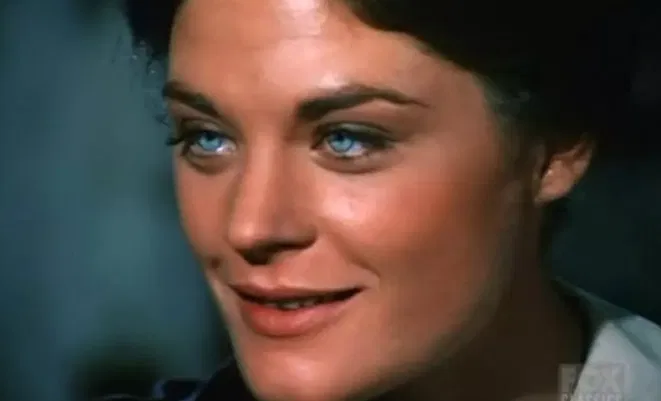

Some people treat aging like an enemy to be fought, frozen, or hidden. Monica Bellucci never seemed interested in the fight. She just kept walking forward — calm, unhurried, almost amused — and somehow became more radiant, more layered, more fully herself with every year that passed.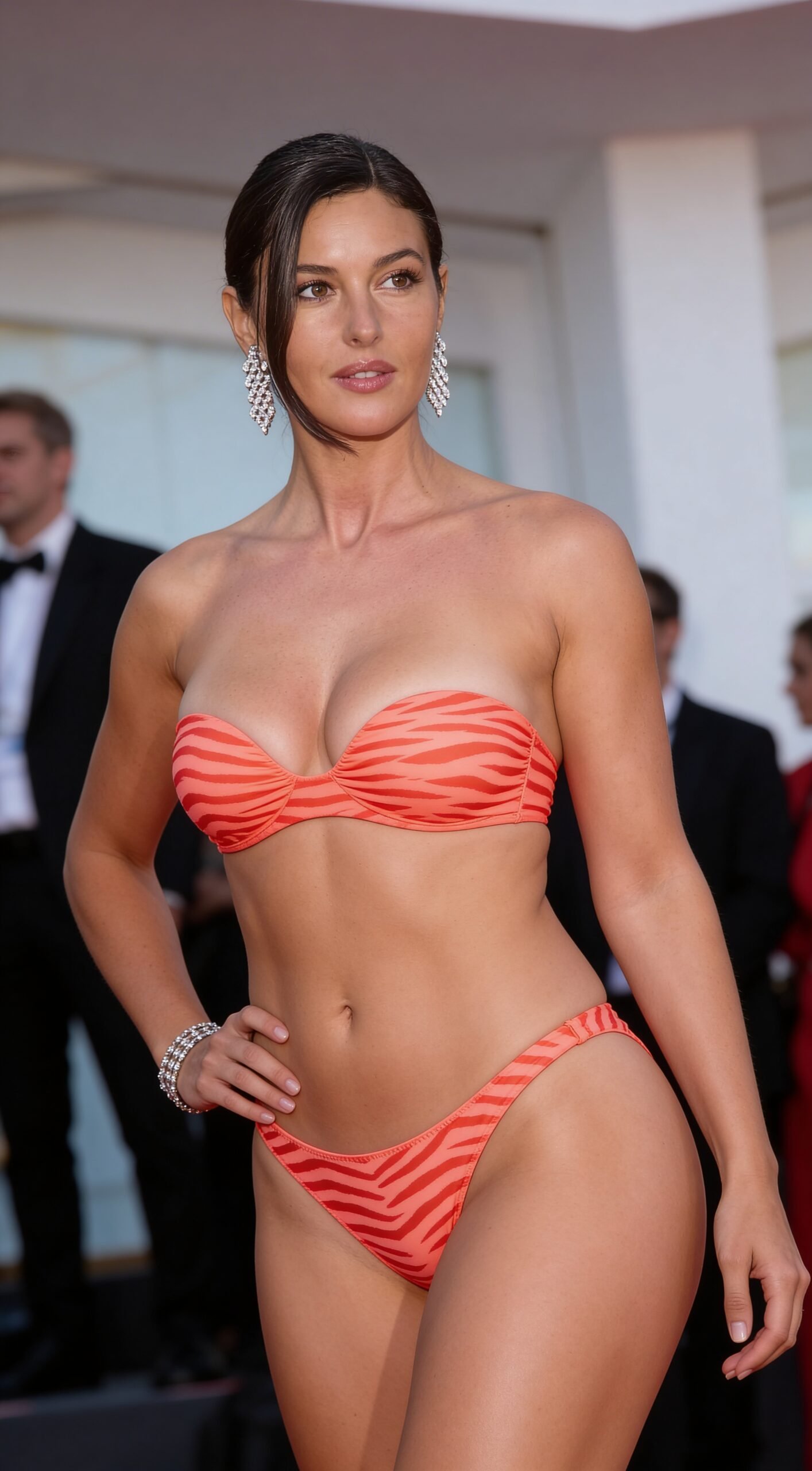
She was born on September 30, 1964, in the small Umbrian town of Città di Castello. An only child in a modest family — her father worked in agriculture, her mother painted — she grew up in a world far removed from red carpets and fashion campaigns. As a teenager she enrolled at the University of Perugia to study law. She still talks about that choice with a small smile: the structure and clarity appealed to her. But structure has a way of bending when something else pulls harder.
To help pay for university she started modeling locally. Within a few years Milan happened — runways, Dolce & Gabbana, Dior, the whole carousel. Modeling was never the destination; it was the bridge. By the early 1990s she was already shifting toward acting — first Italian television, then cinema — and in 1992 Francis Ford Coppola gave her a small but unforgettable role in Bram Stoker’s Dracula. That single appearance cracked the door to the international stage wide open.
From there her career refused to stay in any single lane. She moved between European arthouse, American blockbusters, French cinema, Italian classics. She worked with the Wachowskis (The Matrix sequels), Mel Gibson (The Passion of the Christ), Gaspar Noé (Irréversible), Paolo Sorrentino (The Young Pope), Tim Burton (Beetlejuice Beetlejuice in 2024). One of the most discussed moments came in 2015 when — at fifty — she became the oldest actress ever cast as a Bond woman in Spectre. Lucia Sciarra was never just “the beautiful one”; she was intelligent, dangerous, completely in control. The role felt like a quiet but unmistakable statement: presence matters more than age.
She has always balanced intensity with lightness. Mafia comedies (Mafia Mamma in 2023), poetic dramas, everything in between. In 2021 her own country gave her a special David di Donatello for lifetime contribution to Italian cinema — a tribute that felt earned rather than ceremonial.
But the films are only part of why people still talk about her.
The deeper reason is the way she speaks about time.
She has never joined the public war on aging. Never pretended wrinkles, gravity, or changing skin are enemies to be defeated. In conversation after conversation she returns to the same calm truths:
- “I want to grow old peacefully, without fighting time.”
- “I’ve aged without asking anyone’s permission.”
- “Real beauty is what you carry in your eyes, not what you try to erase from your face.”
She refuses to vanish when the industry expects women past a certain age to fade into the background. She refuses to shrink, to “soften,” to become safer or less sensual as the years accumulate. And that refusal — that serene, unapologetic presence — makes her more visible, more powerful, more herself with every birthday.
Her private life has always remained mostly private, shared only when it felt honest. Married to Vincent Cassel from 1999 to 2013; two daughters, Deva (2004) and Léonie (2010). Later a relationship with Tim Burton that ended amicably in early 2025. Today she divides her time between Paris and Italy, stays close to her daughters, and keeps choosing work that still excites her artistically rather than whatever guarantees the most headlines.
She has never apologized for being sensual. Never tried to become smaller or more “acceptable” as cultural rules shifted. Never let the film industry decide when her chapter should close.
In a time when so much beauty is filtered, retouched, frozen, or simply hidden after forty, Monica Bellucci simply continues to exist — fully, confidently, at whatever age she happens to be.
That kind of ease with time is rare. It can’t be purchased, faked, or forced. It comes from knowing who you are, refusing to be diminished, and letting every year add another layer of depth instead of subtracting anything.
Whether she is crossing a red carpet in a gown that stops the room, answering an interviewer with calm candor, or playing a character who refuses to be simple, she quietly reminds us of something easy to forget: the most beautiful thing a woman can wear is not flawless skin or eternal youth — it is the certainty of a life fully claimed.
And that certainty only grows stronger with time.