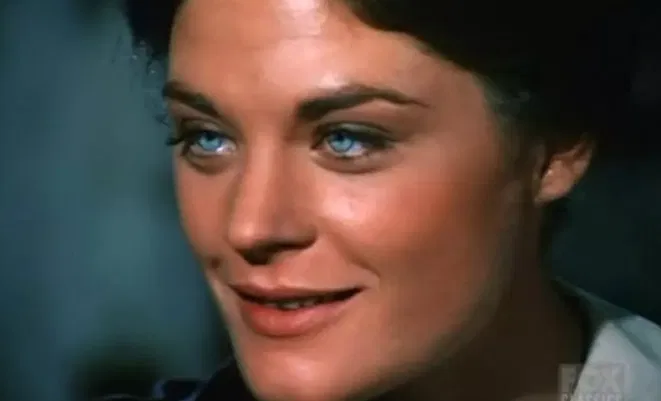

Some people treat age like an opponent to be fought, outsmarted, or hidden. Monica Bellucci has never seemed interested in that fight. She simply keeps moving forward — calm, unapologetic, with a quiet confidence that feels both ancient and modern — and somehow becomes more beautiful, more layered, more alive the longer she continues.
She was born Monica Anna Maria Bellucci on September 30, 1964, in Città di Castello, a peaceful town in Umbria, Italy. An only child, she grew up in a modest family where her father worked in agriculture and transport, and her mother painted. There were no silver spoons or family connections to the arts — just the ordinary rhythms of small-town Italian life, good food, strong family ties, and a certain groundedness that still runs through everything she does.
As a teenager she enrolled at the University of Perugia to study law. She has spoken fondly of those years: the intellectual challenge, the structure, the sense of building something solid. But to help pay for her studies she started modeling part-time. One thing quietly led to another. Milan came calling, then Paris, then the big campaigns — Dolce & Gabbana, Dior, Cartier. The camera loved her immediately: those strong features, the full mouth, the eyes that could be warm one moment and distant the next. Modeling opened doors, but she never saw it as the final destination. It was the bridge.
By the early 1990s she had begun acting in Italian television and cinema. Her international breakthrough came in 1992 with a small but striking role in Francis Ford Coppola’s Bram Stoker’s Dracula. From there she moved fluidly between European arthouse and Hollywood. The early 2000s became her defining period: Giuseppe Tornatore’s Malèna (2000) made her a global sensation; Irréversible (2002) showed her willingness to take risks most actresses would avoid; The Matrix Reloaded and Revolutions (2003) brought her to a massive audience; and The Passion of the Christ (2004) added another iconic layer.
She never stayed in one register. She played a Bond woman at fifty in Spectre (2015) — the oldest actress ever in that role — and made Lucia Sciarra feel dangerous and substantial rather than decorative. She worked with directors as different as Paolo Sorrentino, the Wachowskis, Tim Burton (Beetlejuice Beetlejuice, 2024), and the creators of Mafia Mamma (2023). In 2021 she received a special David di Donatello for lifetime contribution to Italian cinema — a quiet but powerful acknowledgment of decades of work across languages, cultures, and genres.
Yet the films are only part of why she continues to fascinate.
The deeper reason is the way she speaks — and does not speak — about time, beauty, and womanhood.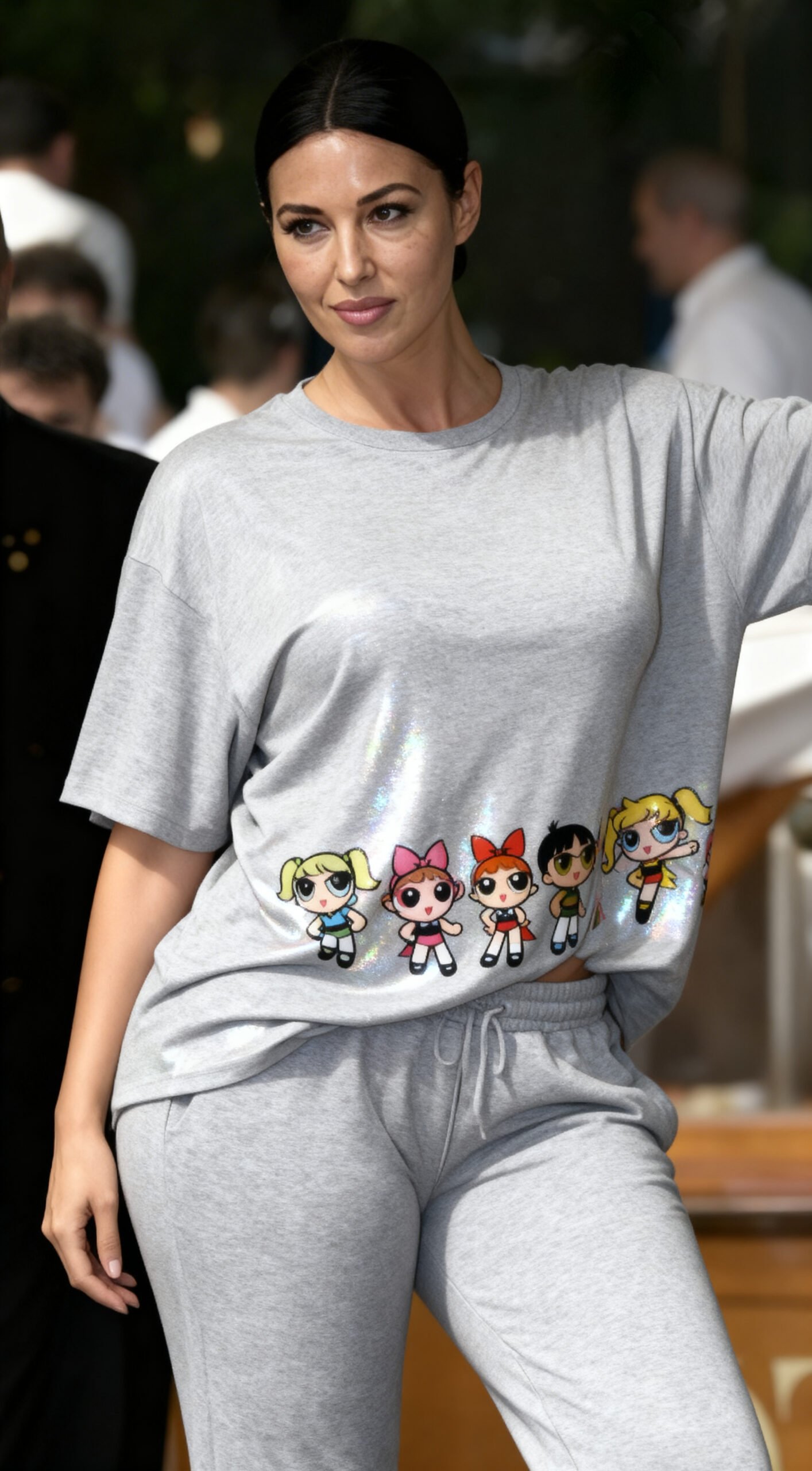
She has never pretended that aging is invisible or something to be battled publicly. In interview after interview she returns to the same calm truths:
- “I want to grow old peacefully, without fighting time.”
- “I’ve grown older without asking permission from anyone.”
- “Real beauty is what you carry in your eyes, not what you try to erase from your face.”

She refuses to disappear when the industry expects women past a certain age to fade into the background. She refuses to shrink, to “soften,” to become safer or less sensual as the years accumulate. And that refusal — that serene, unapologetic decision to keep existing fully — makes her more visible, more magnetic, more powerful with every birthday.
Her personal life has remained mostly private, shared only when it felt honest rather than promotional. She was married to French actor Vincent Cassel from 1999 to 2013; they have two daughters, Deva (born 2004) and Léonie (born 2010). She later had a relationship with director Tim Burton that ended amicably in early 2025. Today she divides her time between Paris and Italy, stays close to her daughters, and continues choosing projects that still excite her artistically rather than ones that simply chase maximum visibility.
She has never apologized for being sensual. Never tried to become smaller or more “acceptable” as cultural expectations shifted. Never let the film industry decide when her story should end.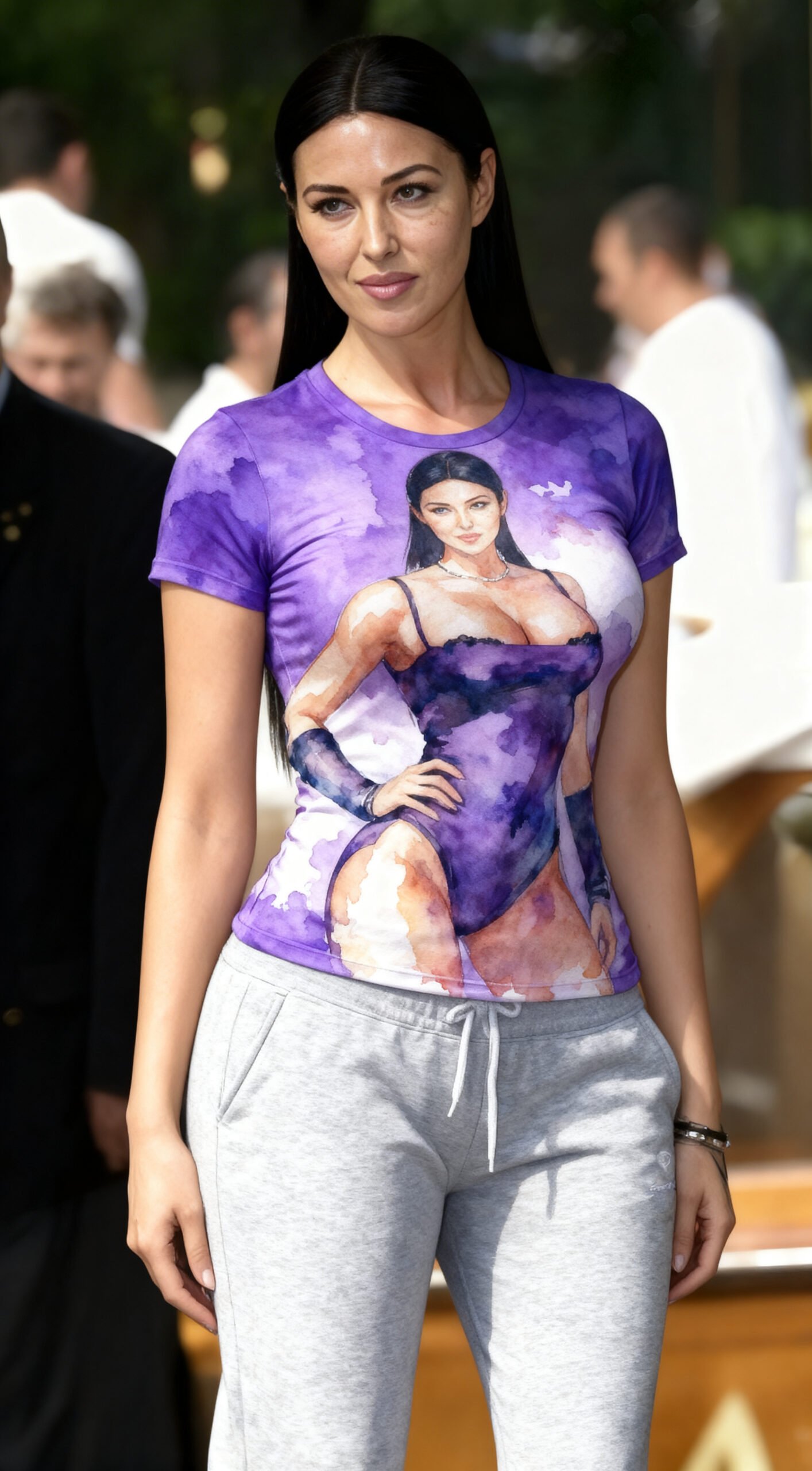
In an era when so much beauty is filtered, retouched, frozen, or simply hidden after forty, Monica Bellucci simply continues to exist — fully, confidently, at whatever age she happens to be.
That kind of ease with time is rare. It cannot be bought, faked, or forced. It comes from knowing who you are, refusing to be diminished, and allowing every year to add another layer of depth instead of subtracting anything.
Whether she is walking a red carpet in a breathtaking gown, giving a quiet and thoughtful interview, or playing a complex character who refuses to be reduced to a single note, she quietly reminds us of something easy to forget: the most beautiful thing a woman can carry is not flawless skin or eternal youth — it is the certainty of a life fully claimed.
And that certainty only becomes stronger with time.